When we think of modern banking success, we often imagine innovative products, digital solutions, or bold marketing campaigns. Yet behind every innovation or seamless transaction operates a vast system of operational mechanisms. In today’s financial ecosystem, the role of a Chief Operating Officer is, first and foremost, to design a positive customer experience by ensuring the simplicity, speed, and security of banking services.
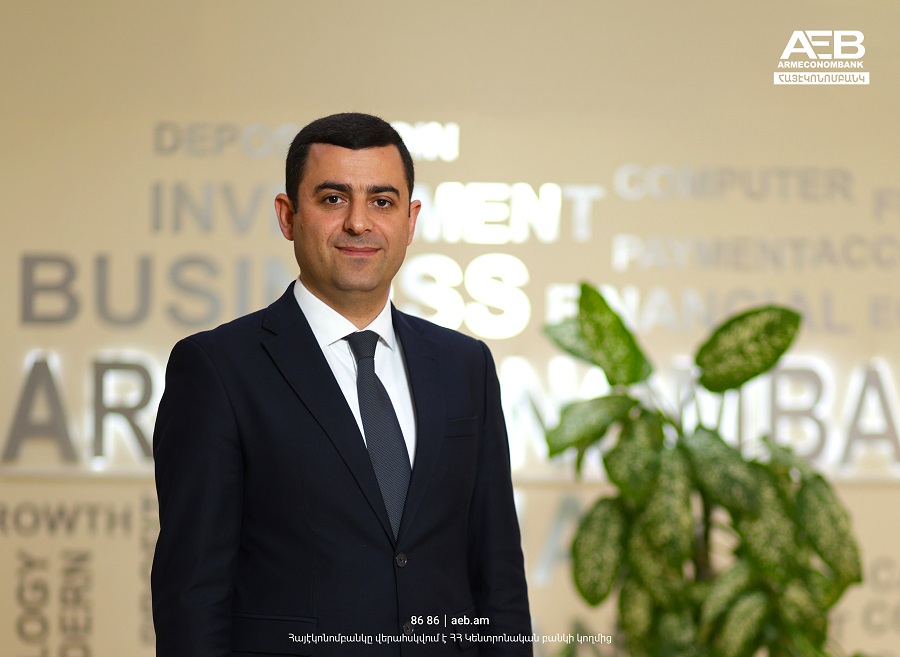
Vahe Ghazaryan, Deputy CEO for Operations at Armeconombank, shares how the synergy of modern technology, security, and the human element is brought to life in practice.
It’s no secret that today’s customers prefer doing their banking transactions on smartphones. Amid the rapid progress of digital banking, what is your vision for branch network development, considering that Armeconombank maintains an extensive presence across all regions of Armenia?
Today, we are witnessing a major evolution in the banking model. Our vision is built on the approach that digital technology and physical presence should not compete, but rather complement each other.
Although the main portion of everyday banking transactions has moved to mobile applications, branches retain their strategic importance by gradually transforming into advisory hubs. Across the regions and in the capital, our wide branch network serves as a primary platform for financing large business projects, delivering premium services, and, most importantly, building long-term, trusted relationships with customers.
On one hand, the bank encourages customers to handle everything independently via digital platforms; on the other hand, the human element and trust remain crucial in banking. How do you balance this approach, especially for clients who prefer visiting a branch?
Giving customers a choice is essential to us. We introduce digital solutions not to replace personal contact, but to streamline routine, repetitive transactions.
When simple operations shift to the mobile app, our branch staff have more quality time to spend with clients who prefer visiting the bank in person.
It is no coincidence that our front-line team undergoes continuous training to provide expert advice to clients. In other words, digital technologies deliver speed and simplicity, while our team provides trust and professional support.
When automating core banking processes or implementing Artificial Intelligence in operations, what key metrics do you use to measure success? Is it cost reduction, time-to-market for new products, or other factors? Put differently, how does internal automation impact customer service?
Automating internal processes or integrating AI solutions cannot serve the sole purpose of reducing operational costs. Our main objective is to build an agile infrastructure that enables us to accelerate product launches, deliver fast service, and adapt to changing market demands.
When we automate complex or repetitive back-office processes (such as loan application processing or card issuance approvals), we directly drive a positive customer experience.
As a result, the customer receives instant service, accesses solutions within seconds, and is freed from unnecessary paperwork - while employees can focus their full attention on understanding the client's real needs and offering the best possible solutions.
Naturally, any innovative product initially faces institutional security and risk management requirements. As the saying goes in banking, product and marketing departments are ready to launch today, while risk management needs another three months for extra checks. This is precisely where operational leadership becomes strategic. How do you strike a balance between speed and security?
This is one of the most critical challenges for any financial institution. Our approach relies on fostering collaboration among cross-functional teams. Risk management and compliance teams are involved not at the final stage of product development, but right from the beginning.
When risk managers act as project co-creators rather than final gatekeepers, potential security vulnerabilities and compliance bottlenecks are identified and resolved during the early design phase, saving us months of additional reviews.
In general, risk mitigation strategy in banking does not impede innovation; rather, it helps craft a product that is simultaneously as fast as possible and unassailable from a security standpoint.
Developing a great product is only half the battle; it still needs to be delivered to the client correctly and efficiently. How is the sales process organized in branches today, and what tools do you equip front-line staff with to offer the best solutions?
A good product creates value only when it reaches the customer at the right time and through the right channel.
Sales in our branches are no longer driven by aggressive advertising; instead, they are structured around a consultative approach centered on the customer’s actual needs.
Before the marketing team launches a campaign, the operations department ensures complete readiness on the front line. This means automated workflows, simplified documentation, and digital tools are pre-integrated into branch systems. Consequently, when customer flow increases following a campaign, our staff can serve clients swiftly and without operational disruptions.
Feedback mechanisms are equally valuable in this context: observations and customer feedback gathered in branches are fed back to product development and marketing teams. This allows us to continuously refine our products based on real client experiences.
In today’s competitive financial market, exceptional service and long-term customer relationships have become paramount. What are your main priorities for raising service quality, and what relevant challenges or hurdles do you face across the branch network in maintaining flawless standards?
Our top priority is ensuring a unified, high standard of service: a customer must experience the same quality, speed, and respectful service whether in a branch, via the call center, or through the mobile app.
The main challenge amid rapid digitalization is continuous staff training, focusing not only on technical expertise but also on soft skills.
Ultimately, service quality is not measured by the complete absence of issues, but by how quickly and effectively you resolve them when they arise - because our ultimate goal is to deliver a positive experience for every single customer.
Looking ahead, Mr. Ghazaryan, how do you envision the Armeconombank’s operational model, say, 5 years from now? And what is the core value that will remain unchanged for your customers, regardless of technological shifts?
Five years from now, the Bank’s operational model will be exceptionally intelligent, flexible, and almost invisible to the customer. The majority of banking operations will occur seamlessly in the background - instantly and without effort on the client's part.
However, no matter how technology advances, there is one core value that will remain constant: trust. The commitment that Armeconombank was, is, and will remain a reliable partner for its clients - one they can lean on in any situation, regardless of the technological era.
86 86 | aeb.am
Armeconombank is supervised by the Central Bank of Armenia.









 Սեդրակ Քոչարյանը 2 ամսով կալանավորվեց